IoT Devices for Helium: What Works and What to Pick
IoT devices on Helium fall into three groups: hotspots that provide coverage, sensors that send data through that coverage, and mappers that prove coverage exists. Most people confuse the three at first, and that leads to bad purchases.
A LoRaWAN hotspot listens on the 868 MHz band in Europe and relays packets from nearby sensors. A sensor only talks. A mapper does a bit of both, since it transmits location beacons that hotspots hear and report.
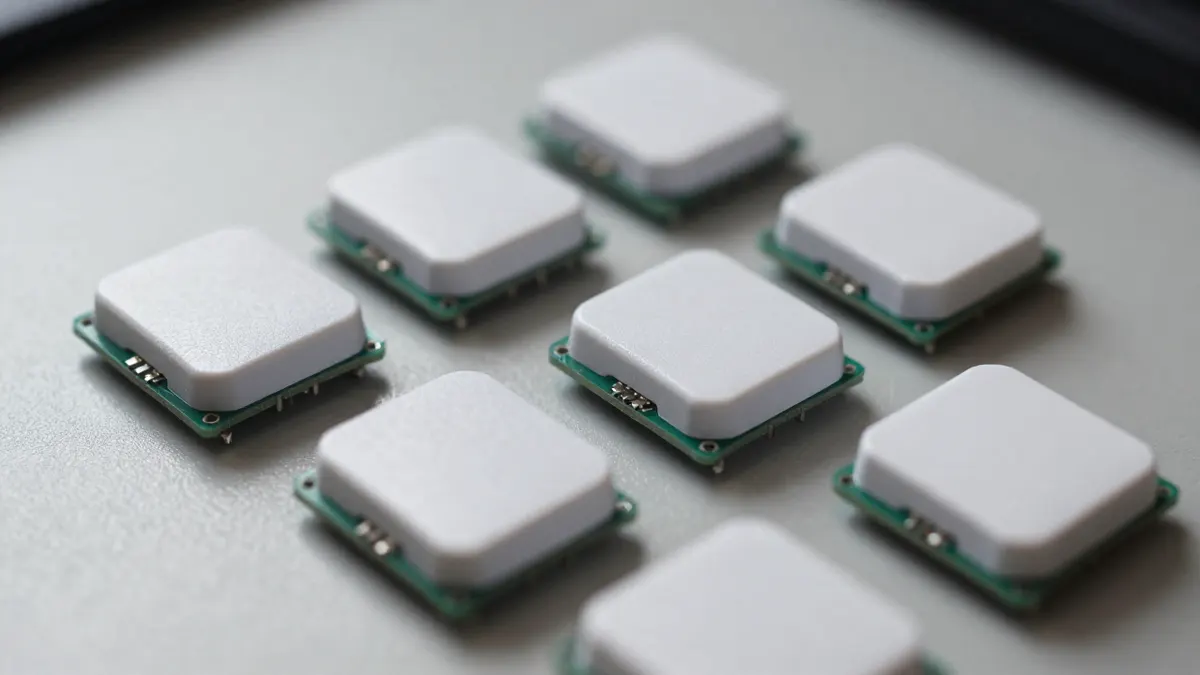
IoT devices on Helium: the main categories
Hotspots and gateways
These are the devices that earn rewards for coverage and data transfer. A typical indoor LoRaWAN hotspot covers roughly 1 to 3 km in a city and 5 to 10 km in open country with a good outdoor antenna. Power draw is low, usually 5 to 10 W, so running costs stay around a few euros per month.
Placement matters more than the model. A unit on a roof beats a premium unit in a basement every time.
Sensors and trackers
Sensors measure temperature, humidity, soil moisture, air quality, GPS position or door state, then send a few bytes every few minutes. Battery life ranges from several months to over five years depending on the reporting interval. If you only need a handful of readings per day, LoRaWAN is cheap and efficient. If you need video or constant streaming, it is the wrong tool.
Mappers
Mappers exist to fill gaps. Coverage maps on Helium rely on people driving or walking around with a small transmitter. Two options are common. The HeliumHotShop Helium Mapper is a plug-and-play unit that works out of the box. The Heltec CubeCell helium mapper is a DIY board, cheaper, but you flash the firmware and configure it yourself.
The DIY route suits anyone comfortable with a USB cable and a serial console. Everyone else should take the ready-made one.
Which IoT devices for Helium suit your goal?
Start with the goal, not the catalog.
- You want passive rewards and have a good spot: a hotspot with an outdoor antenna.
- You want to improve coverage in your area: a mapper.
- You want data from a place, such as a garden or a balcony: a sensor, plus a hotspot nearby.
- You want to contribute to a data project: an environmental sensor.
On the last point, the Atmotube Pro air quality monitor is a portable unit that measures particulates and volatile compounds and feeds the Planetwatch network. It is a good example of a device where the reward is secondary and the data itself is the point.
Beyond LoRaWAN: other Helium hardware
Helium is not only LoRa anymore. Some devices connect people to a decentralized network in other ways. The Deeper Connect Mini mining edition is a small privacy-focused network node, not a LoRaWAN gateway, so do not expect it to cover sensors. It runs as a VPN and network device and earns its own token, not HNT.
Check the frequency plan before buying anything. Europe uses EU868. A US915 device will not behave properly here, and rewards depend on regional compliance.
Realistic expectations on rewards
Earnings from hotspots have dropped a lot since the early years. In dense cities, a hotspot may earn very little because many neighbors already cover the same cells. In rural areas with few hotspots, results are better, but data traffic is low.
Treat any reward as a bonus. A device that costs around 100 to 300 euros will often take a long time to pay back, and in some places never will. Plan around the use you get from it.
Setup checklist
- Confirm the regional frequency (EU868 for Europe).
- Pick a high, clear location, ideally a window or roof.
- Use low-loss coaxial cable, kept under 5 m if possible.
- Verify your internet connection is stable, wired if you can.
- Register the device in the official app and wait for it to sync, which can take several hours.
Frequently Asked Questions
Do IoT devices need a hotspot nearby to work on Helium?
Yes. A sensor sends its packets over radio, and a hotspot in range picks them up and forwards them online. Without coverage, the data goes nowhere. Check the coverage map before you install anything.
What is the range of a LoRaWAN device?
In a city, expect around 1 to 3 km. In open terrain with line of sight, 10 km or more is possible. Walls, hills and dense buildings cut that figure quickly.
Can I build my own mapper?
Yes. A small LoRa board with a GPS module is enough, and many people flash open firmware on one. It takes an hour or two the first time and costs less than a ready-made unit.
Are Helium IoT devices still worth it in 2026?
For sensors and coverage projects, yes, because the network is cheap to use. For pure earnings, it depends heavily on your location and how many hotspots already serve it.