Heltec Indoor Helium Hotspot (EU868)
The Heltec indoor Helium hotspot is a compact LoRaWAN gateway built around an ARM board and a Semtech-based radio, tuned to the 863 to 870 MHz band used across Europe. It draws roughly 5 W, so running it around the clock costs only a few euros per year in electricity. It fits on a shelf, plugs into Ethernet or Wi-Fi, and needs no tools to install.
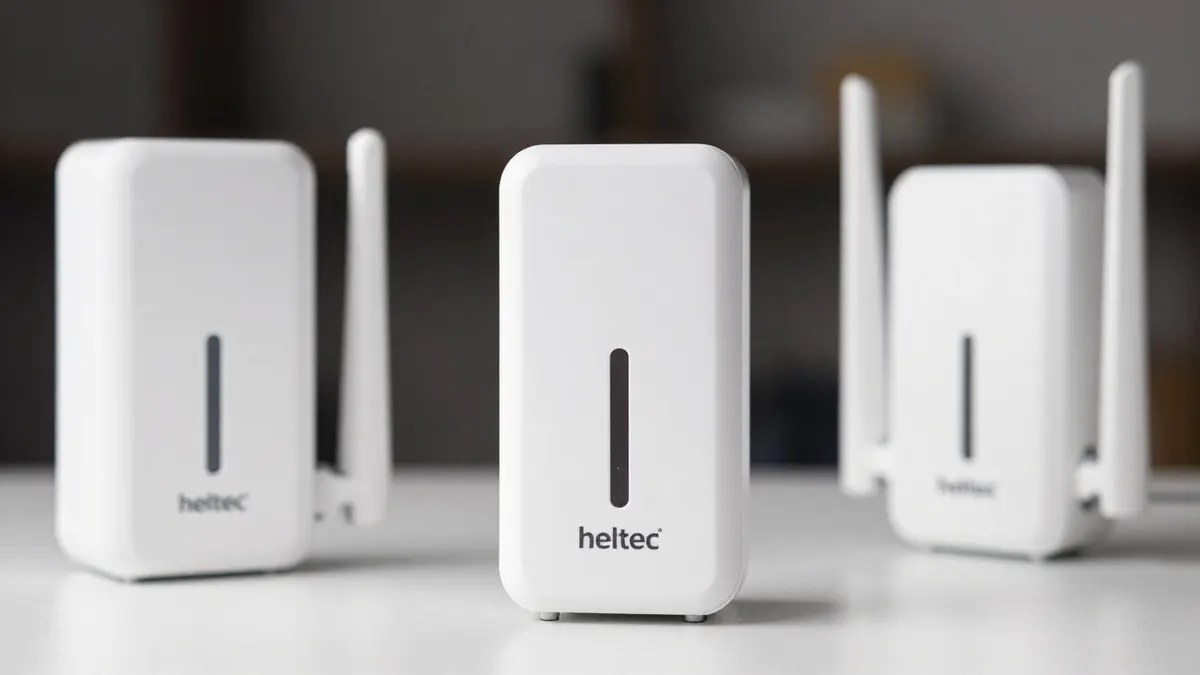
What the Heltec indoor Helium hotspot actually is
Inside the plastic case sits a small Linux computer, a LoRa concentrator and a short internal or SMA-connected antenna, depending on the batch. Power comes from a 5 V USB-C supply. A single status LED tells you whether the unit has booted, found a network and joined.
It is built for indoor use only. Rain, condensation and temperatures below about -10 °C or above 45 °C are outside what the casing is meant to handle.
- Frequency plan: EU868
- Connectivity: Ethernet, Wi-Fi, Bluetooth for setup
- Power: about 5 W, USB-C
- Typical street price: from around 100 to 200 euros, depending on stock and stage of the network
Heltec Helium hotspot EU868: why the frequency plan matters
LoRa hardware is region locked. A unit made for US915 will not talk to European sensors, and using the wrong band can break local radio rules. Check that the label or listing says EU868 before you pay for anything.
The EU868 plan also comes with a duty cycle limit, usually 1 percent on most sub-bands, meaning a device may transmit for only 36 seconds in every hour. That rule is why dense city coverage matters less than clean, steady uptime. If you want to compare other units on the same plan, a list of EU868 helium hotspots makes a good starting point.
Range and placement
Indoors, expect a few hundred metres in a built-up area. With a window position on an upper floor and a clear line of sight, 2 to 5 km is realistic. Rural spots with open ground can do better, but the stock antenna is the limiting factor.
Put it near a window, away from metal shelving, routers and microwave ovens. Height beats almost everything else. A hotspot on the third floor will see more than the same unit in a basement, whatever the specs say.
An external antenna can help, but only if the unit exposes a connector. Check the case before planning a mast.
Setting it up
Setup takes about 10 to 15 minutes if your network behaves.
- Connect the power supply and Ethernet cable, then wait for the LED pattern that shows it is ready.
- Open the manufacturer or Helium-compatible onboarding app and pair over Bluetooth.
- Pick your location on the map and confirm it. Location changes can carry a fee, so choose carefully.
- Let the unit sync. A first sync can take from a few minutes to several hours.
Ethernet is the better choice. Wi-Fi works, but dropped connections lower your uptime and your coverage record.
Earnings: set honest expectations
Rewards on the Helium network in 2026 are modest for a single indoor unit. Many owners see well under a few dollars per month, and in quiet areas it can be close to nothing. Income depends on how many devices near you actually send data through your gateway.
Treat the device as a way to join a community network and test coverage, not as a reliable payback project. If the hardware cost is your main worry, look at how long it takes at low yields before buying.
How it compares with other indoor miners
The SenseCAP M1 indoor hotspot has a similar footprint and a longer track record, with a metal-backed case and a more mature support base. It is usually a bit pricier. The Finestra miner helium hotspot sits in the same class and is worth a look if the Heltec is out of stock.
Radio performance across these indoor units is close. Differences show up in build quality, firmware updates and how easy the supplier is to deal with, so read recent owner reports rather than spec sheets.
Frequently Asked Questions
Does the Heltec indoor hotspot work outside Europe?
No, the EU868 version is built for European frequencies. In the US or Australia you need the matching regional version, as the radio band and rules differ.
How much power does it use?
About 5 W under normal load, which works out to roughly 44 kWh per year. At typical European rates that is a few euros to under ten euros annually.
Can I add an external antenna?
Only if your unit has an SMA or similar connector. Many indoor models use a fixed internal antenna, so confirm this before you plan any upgrade, and never power the unit without an antenna attached.
Why is my hotspot offline?
Most often it is a Wi-Fi drop, a router change or a power supply that is too weak. Try Ethernet, reboot, and wait 30 minutes for it to resync before doing a factory reset.