Finestra Miner Helium Hotspot (EU868)
The Finestra Miner is a LoRaWAN hotspot built for the Helium network on the EU868 frequency plan, the band used across Europe. It was one of the earlier plug-and-play units, and many are still running today. If you own one, or spot a used one for sale, here is what you need to know in 2026.
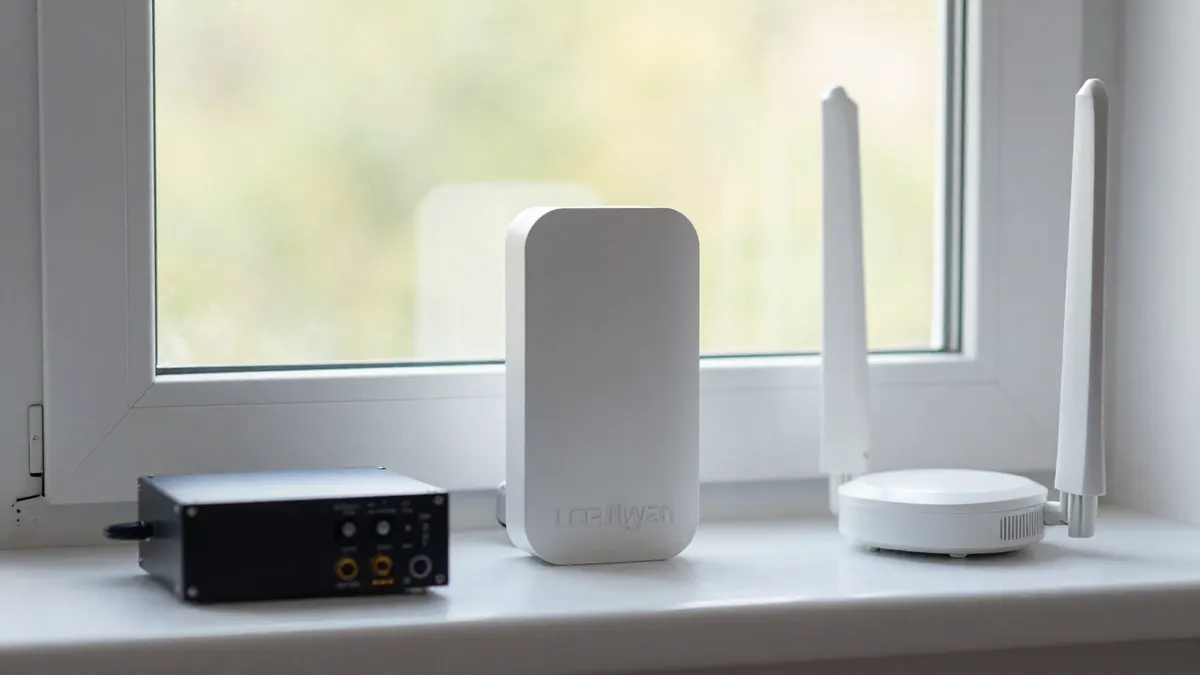
What the Finestra Miner Is
The unit is a compact indoor gateway with a built-in antenna and an Ethernet port. It carries a LoRa concentrator for the 863 to 870 MHz range and a small Linux board that runs the packet forwarder and, on the original firmware, the Helium software.
Typical power draw sits around 5 W, so running it all year costs roughly 40 to 50 kWh. That is a few euros a month at most, even with high electricity prices.
- Frequency plan: EU868 only, so it will not work in North America
- Connection: wired Ethernet, with Wi-Fi setup depending on firmware
- Power: 5 V supply, roughly 5 W
- Stock antenna gain: about 3 dBi
Finestra Helium Hotspot: Range and Placement
Indoors, expect a useful radius of 100 to 300 meters in a dense town. In open countryside with the unit near a window on an upper floor, 2 to 5 km is realistic for line-of-sight devices.
Placement matters more than anything else. Put it high, near glass, away from metal shelving, routers and power bricks. A hotspot in a basement will hear almost nothing, whatever the model.
The stock antenna is modest. A 5 to 6 dBi outdoor antenna with a short, low-loss cable usually improves coverage, but only if it sits outside and high. Long thin cable eats the gain, so keep runs under 5 meters when you can.
Setting Up a Finestra Miner
Setup is short if the firmware is current. Plan on 15 to 30 minutes, plus waiting time for the first sync.
- Connect the antenna before powering on. Running a LoRa radio without one can damage it.
- Plug in Ethernet and power, then wait for the status light to settle.
- Check that the unit gets a local IP address from your router.
- Confirm the region is set to EU868 in the configuration.
- Let it sync fully, which can take from a few hours to a day.
Be aware that the Helium network moved to a new architecture, and many older miners now work as simple LoRaWAN gateways pointed at a network server rather than as classic mining devices. Check the current firmware options before assuming anything about rewards.
Earnings and Whether It Is Worth It
Be realistic. Helium rewards today depend on actual data transfer and on coverage in your area, and an older indoor unit in a quiet neighborhood may earn very little. Some owners see well under 1 HNT a month, others nothing meaningful at all.
Treat a Finestra as a cheap way to learn LoRaWAN or to cover a gap, not as an income source. If you want something more current, compare it against the Panther X2 Helium Hotspot style of hardware, or look at the Panther X2 helium hotspot and the Heltec indoor helium hotspot for newer designs and firmware support.
Finestra Miner vs Other EU868 Options
Among EU868 helium hotspots, the Finestra sits at the simple end. It lacks the stronger concentrators and the outdoor build of some later units. Its advantages are low power use and a very easy install.
The Heltec indoor helium hotspot is a closer rival for indoor use, while the Panther X2 helium hotspot suits people who want better radio performance and plan to mount an antenna outside. Used Finestra units often sell for well under the original price, from around 30 to 80 euros depending on condition.
Frequently Asked Questions
Does the Finestra Miner work outside Europe?
No. This version is built for EU868, so it only matches regional rules in Europe and a few other areas using that plan. In the US you need a US915 model.
Can I improve range with a better antenna?
Yes, if the hardware allows an external antenna. A 5 to 6 dBi unit mounted outdoors and high up can add noticeable distance. Indoor swaps rarely change much.
Is it still worth running in 2026?
It depends on your goal. For learning or private LoRaWAN coverage it is fine, but for earning tokens the return is usually small. Check local coverage and firmware support before spending anything.
How much electricity does it use?
Around 5 W, which comes to roughly 44 kWh a year. At typical European rates that is a few euros per month.