DC Power Jack Splitter 2.1mm: What It Does and How to Use It Safely
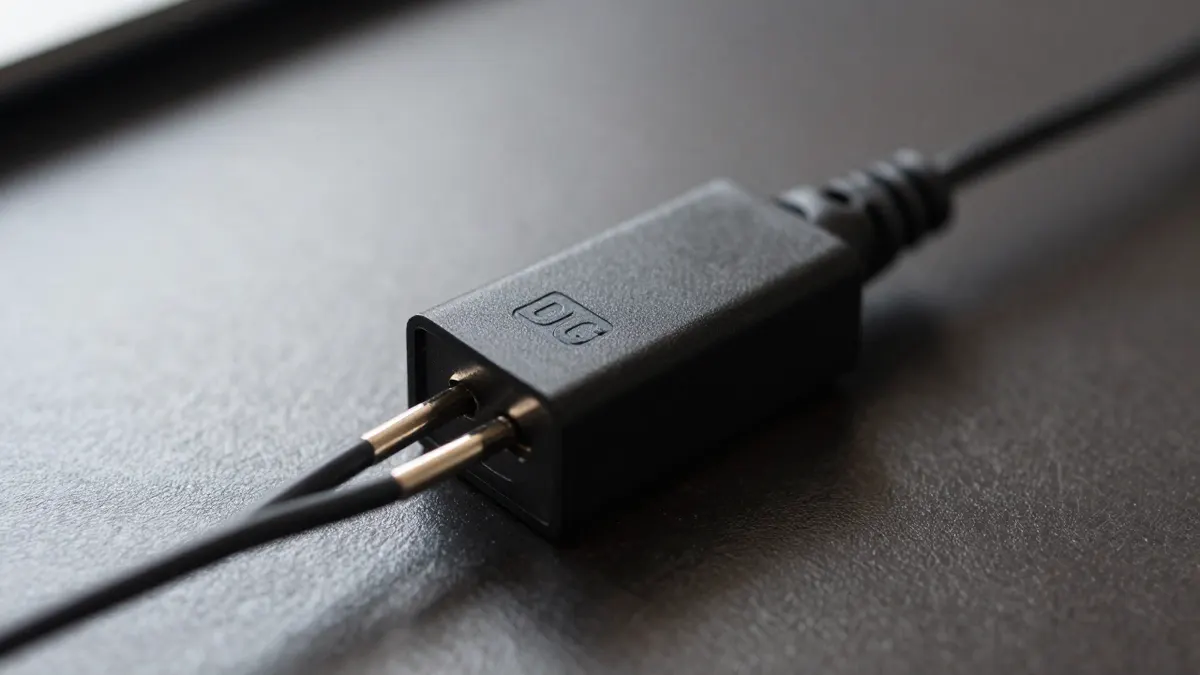
A DC power jack splitter 2.1mm takes one barrel plug output and turns it into two or more. The usual layout is one female input and two male plugs, or one male plug feeding a Y cable with two female sockets. It lets a single 12V adapter power, for example, a LoRaWAN hotspot and a small switch at the same time.
The "2.1mm" is the diameter of the center pin hole. The outer barrel is most often 5.5mm. That 5.5 x 2.1mm pairing is the most common size on routers, cameras and many hotspot miners.
Check the connector size before anything else
A 5.5 x 2.5mm plug fits into a 2.1mm socket, but the contact is loose and can drop out. A 2.1mm plug in a 2.5mm socket is worse. Measure the barrel with calipers if the label is missing. Two minutes of checking saves a dead device.
Other sizes you will meet include 5.5 x 2.1mm, 5.5 x 2.5mm, 3.5 x 1.35mm and 4.0 x 1.7mm. They look alike on a photo and they are not interchangeable.
Polarity and voltage: the two things that kill gear
Most devices use center positive. The center pin carries the plus, the outer sleeve carries ground. Look for a small symbol near the socket, a circle with a dot and a plus on the dot side. A splitter does not change polarity, so every device on it must share the same convention.
Voltage matters just as much. A splitter shares the voltage, it does not convert it. Plug a 5V device and a 12V device into the same branch and one of them will be wrong. Every output on the splitter carries exactly what the adapter delivers.
How much current can a 2.1mm splitter carry
Good barrel connectors are usually rated around 5A, and cheap splitter cables with thin wire often manage closer to 2A to 3A in practice. The rule is simple: add up the current draw of all devices, then keep the total under about 80% of the adapter rating and under the cable rating.
A typical example: a 12V 2A adapter, a hotspot drawing about 0.8A and a switch drawing about 0.4A. Total 1.2A, which is 60% of the supply. Fine. Add a third device at 0.8A and you are at 2.0A, right on the limit, and the adapter will run hot.
- Use wire of at least 22 AWG for runs under 1 meter at 2A.
- Go thicker, around 20 AWG, for 3A or for cables over 2 meters.
- Avoid daisy chaining splitters. Each joint adds resistance and a failure point.
Using a splitter with hotspot miners and IoT gear
Many LoRaWAN hotspots and gateways run on 5V or 12V barrel power. If your setup needs 12V and your only source is a PoE line, a PoE splitter 48V to 12V gives you a clean barrel output at the device. For smaller boards that need 5V, a PoE splitter 48V to 5V does the same job. Run the splitter after that conversion, never before it, and only if every branch shares the voltage.
If you power the network side with a PoE injector 48V helium setups often use, the injector feeds the cable and the splitter at the far end handles conversion. A DC splitter is for sharing one low voltage supply, not for sharing PoE.
A single board computer such as a Raspberry Pi 4 Model B uses USB-C at 5V and about 3A, so it does not belong on a 2.1mm barrel splitter unless you add a proper regulated step-down converter. Feeding it 12V directly will destroy it.
Buying and installing tips
Pick a splitter with molded strain relief and tight, snug plugs. Loose plugs cause brief power drops, which show up as random reboots and sync problems on a miner. If a device reboots when you touch the cable, the contact is the cause.
For outdoor installs, keep the splitter inside a sealed enclosure or a junction box rated at least IP65. Barrel connectors are not waterproof. Moisture on a 12V line corrodes the pin within a few months.
Label each branch with tape. Six months later you will not remember which plug feeds which device, and unplugging the wrong one takes the hotspot offline.
Frequently Asked Questions
Can I split one 12V adapter between two devices?
Yes, if both devices use 12V, the same polarity and the combined current stays below about 80% of the adapter rating. A 12V 3A adapter can run two devices drawing 1A each with margin to spare.
Does a splitter reduce the voltage?
No. A passive splitter passes the same voltage to every output. Voltage drop can occur on long or thin cables, usually a few tenths of a volt at 2A over 3 meters of thin wire.
Is 2.1mm the same as 2.5mm?
No. They differ by 0.4mm on the center pin. A mismatched plug may fit but connects poorly and can overheat or cut out.
How do I know the polarity of my device?
Check the label or manual for the center-positive symbol. If it is missing, a multimeter on the adapter output tells you: a positive reading with the red probe on the center pin means center positive.