PoE Splitter 48V to 5V: Power a 5V Device Over One Ethernet Cable
What a PoE splitter 48V to 5V does
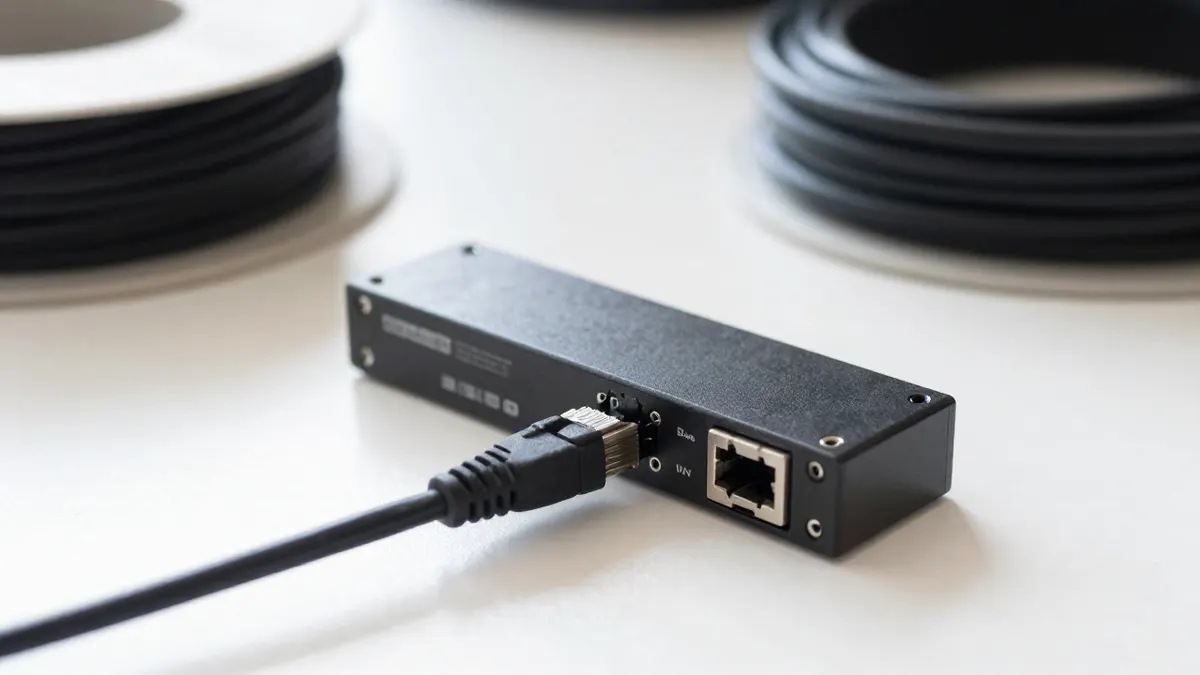
A PoE splitter 48V to 5V takes the power that travels down an Ethernet cable and converts it to a steady 5V DC output. You plug the cable from your PoE switch or injector into the splitter, and a short lead goes from the splitter to the device. Data passes through to a second RJ45 port.
It solves a simple problem. Your Raspberry Pi, IoT gateway or small LoRaWAN board needs 5V, but the nearest socket is on the other side of the building.
Check the input voltage first
Most splitters of this type accept a wide input, often 44V to 57V, so they work with both 802.3af and 802.3at sources. Standard PoE runs at a nominal 48V. Passive PoE gear is a different story, because it may send 24V or even 12V down the cable, and a 48V splitter will not start on those.
If your injector is a gigabit unit labelled 48V, you are fine. If the label says 24V passive, look for a different splitter.
Pick the right connector and current
Output current matters more than most buyers expect. A splitter rated at 5V 2A gives you 10W, which suits a Raspberry Pi 3 or a basic sensor node. A Pi 4 under load wants 3A, so choose a 5V 3A model with some margin.
Then look at the plug. Older boards use micro USB, newer ones use USB-C, and a few hotspot or sensor boards use a barrel jack. The page on a PoE splitter 48V to 5V micro USB covers the older plug, while the guide to a PoE splitter 48V 5V USB-C explains the newer one, including why cheap USB-C splitters sometimes fail to power a Pi 4.
Cable length and speed limits
Ethernet is limited to 100 metres between the switch and the end device, and that includes patch leads. Power loss on long runs is small at 48V, which is the whole reason PoE is used. At 100 metres with decent Cat5e or Cat6, a 10W load loses well under a watt.
Check the data rating too. Some splitters only pass 100 Mbps. For a hotspot or gateway that is plenty, but a camera or a backhaul link may want gigabit.
Heat, enclosures and outdoor use
Conversion from 48V to 5V is not perfectly efficient. Expect 80% to 90%, so a 10W load turns about 1 to 2W into heat inside the splitter. Leave it some air.
Most splitters are not waterproof. For a roof or mast, mount the unit in a sealed box and use outdoor-rated, shielded cable. Put a drip loop in the cable before it enters the enclosure.
When 5V is the wrong choice
Some devices want other voltages. Routers and many antennas take 12V, in which case a PoE splitter 48V to 12V is the right part. Using a 5V unit there will simply leave the device dead.
If you do not yet have a PoE source, you need an injector as well. For Helium setups, the notes on a PoE injector 48V helium explain what to look for on the supply side.
Quick checklist before wiring
- Source gives 48V (802.3af or at), not passive 24V
- Output current at least 20% above your device draw
- Connector matches the board: micro USB, USB-C or barrel
- Total cable run under 100 metres
- Enclosure sealed if installed outdoors
Frequently Asked Questions
Can I use a PoE splitter with any Ethernet cable?
Cat5e or better is the safe choice. Very old Cat5 often works at short distances, but thin or copper-clad aluminium cable causes voltage drop and dropped connections.
Will a 5V splitter damage my device if the voltage is slightly off?
A decent splitter regulates its output to about 5V, give or take 5%. Cheap units can show ripple or overshoot, so measure the output with a multimeter before plugging in an expensive board.
Do I need a PoE switch, or is an injector enough?
Either works. A PoE switch powers several devices at once, while an injector suits a single run. Just match the total wattage to the power budget of the source.
How much power can a 5V splitter deliver?
Typical models give 10W to 15W, which is 2A to 3A at 5V. The 802.3af standard allows about 12.95W at the device, so that is the practical ceiling after losses.