IP66 Waterproof Enclosure (225x173x86mm) for a Helium Hotspot Outdoors
A helium hotspot outdoor enclosure has one job: keep rain, dust and condensation away from the board while letting the radio do its work. The 225x173x86mm IP66 box is one of the most common sizes for that, because it swallows a typical LoRaWAN miner, a power supply and a few connectors without leaving you a lot of dead air to heat and cool.
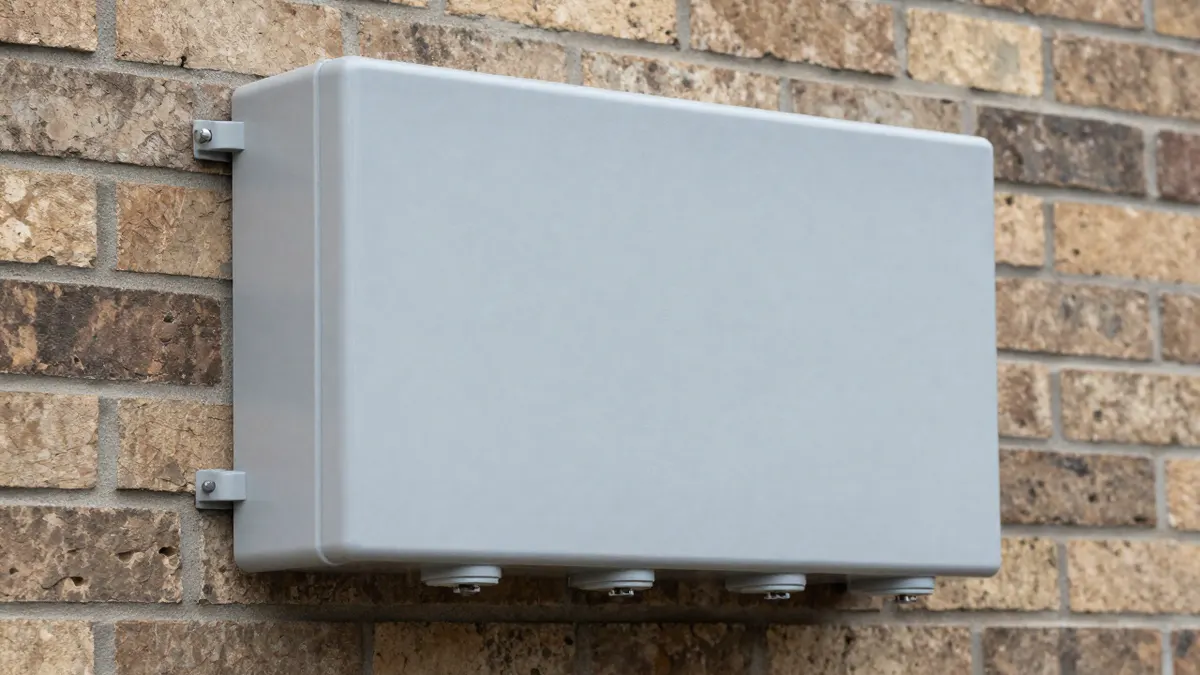
Will your hotspot fit in a 225x173x86mm enclosure?
Inside, expect usable space of roughly 205x155x75mm once you account for wall thickness and mounting posts. That fits most compact indoor-style miners, a Raspberry Pi based unit with its hat, or a small gateway board with a PoE splitter beside it.
It does not fit the large aluminium-cased miners, and it gets tight if you also want a surge protector and a DC converter inside. Measure the hotspot with its antenna connectors attached. Pigtails need a bend radius of at least 30mm, which eats into the 86mm depth faster than most people expect.
If your gear is bigger, or you want a pole-mount design with a radio sealed in one unit, the RF Elements StationBox enclosure is the usual step up.
What IP66 actually protects against
The first digit, 6, means dust tight. The second, 6, means it survives powerful water jets from any direction (12.5mm nozzle, around 100 litres per minute at 3 metres). Heavy rain and wind-driven spray are well inside that limit.
IP66 does not cover immersion. If the box sits where water pools, such as a flat roof with poor drainage, you want IP67 instead. Mount it with the lid hinge or seam facing down or sideways, never as a shallow cup facing up.
Sealing the entries is where most boxes fail
The enclosure itself rarely leaks. The holes you drill do. Each cable needs a proper gland sized to the cable diameter, and a Cable gland M12 M20 pairing covers most setups: M12 for thin antenna or Ethernet leads (3 to 6.5mm), M20 for thicker power or shielded cable (6 to 12mm).
Some practical points:
- Drill from the bottom or side wall, never the top face.
- Tighten the gland nut until the rubber insert grips the cable, then stop. Over-tightening cracks the thread.
- Leave a drip loop in each cable so water runs off before it reaches the gland.
- Fit unused holes with blanking plugs.
Outside the box, the antenna connectors are exposed. Wrap each one with self-amalgamating tape, then cover that with J20 waterproof tape, which is a common choice for N-type and SMA joints on masts.
Dealing with condensation inside the box
A sealed box breathes a little as temperatures swing. On a cold night, warm humid air inside turns to droplets on the lid. Over a winter that can ruin a board.
Close the box on a dry day, not in morning mist. Then add a Dehumidification bag for enclosure, a reusable silica pouch that you dry out in an oven at about 100 to 120 degrees for a couple of hours when it saturates. In a box this size, one small pouch is enough, and checking it every three to six months is a reasonable rhythm.
A pressure-equalising vent plug is another option if you live somewhere with large daily temperature swings.
Mounting and placement tips
The box ships with wall-mount ears, and four screws into a solid surface are fine. For a pole, use two stainless steel hose clamps through a bracket plate. Stainless matters near the coast, where plain zinc steel rusts within a season.
Keep the box out of direct sun if you can. A dark grey lid in July sunshine can push internal temperatures 20 degrees above ambient, and most miners start throttling or rebooting past 60 degrees. A small shade plate or a north-facing wall solves most of that.
For range, the antenna should sit outside and as high as practical, not inside the plastic. Run a short, low-loss coax from the box to the antenna. Every extra metre of thin cable costs you signal, so keep the run under 3 metres where possible.
Frequently Asked Questions
Is the 225x173x86mm enclosure large enough for a power supply too?
Usually yes, if the supply is a small DIN-style or plug-in module under about 80mm long. Many people avoid the problem by powering the hotspot over PoE and keeping the supply indoors. That also reduces heat inside the box.
Can I leave the lid gasket dry, or does it need grease?
A thin film of silicone grease on the gasket helps it seat and stops it from sticking after a year or two. Check that the gasket sits fully in its groove before you close the lid. A pinched gasket is the most common cause of a leak.
Does a plastic enclosure block LoRa signal?
Plastic such as ABS or polycarbonate has very little effect at 868 or 915 MHz. A metal box would block it badly, which is why antennas are best mounted outside either way. If you keep the antenna inside, expect a small loss rather than a dead signal.
How long does an IP66 box last outdoors?
A UV-stabilised polycarbonate box typically lasts 8 to 10 years in full sun before it turns brittle. Cheaper ABS can yellow and crack in 3 to 5 years. Check the datasheet for a UV rating before you decide.