Reusable Dehumidification Bag for an Outdoor Enclosure: How It Works and When to Use It
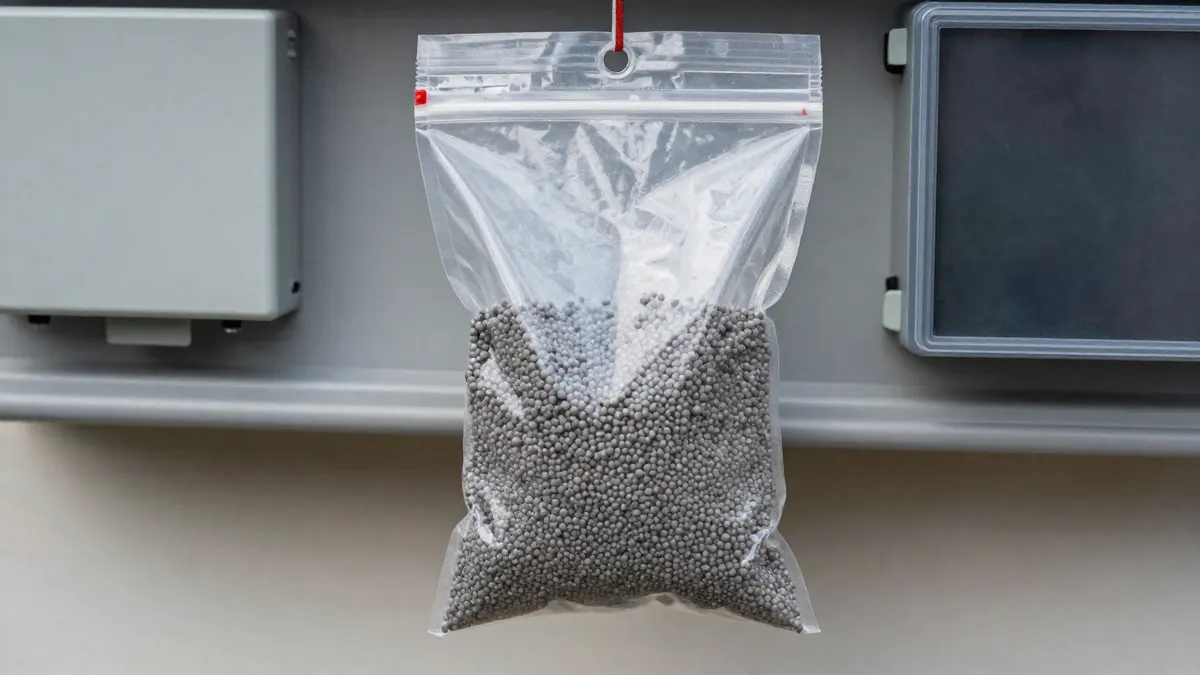
A reusable dehumidification bag for an outdoor enclosure is a small fabric pouch filled with moisture-absorbing granules, usually silica gel or a clay-based desiccant. You drop it inside the box, close the lid, and it pulls water vapour out of the trapped air. When the granules are full, you dry them out and use the bag again, often several hundred times.
For a LoRaWAN hotspot on a roof or a mast, this matters more than most people expect. Electronics do not mind rain on the outside. They mind a film of condensation on the board.
Why condensation forms inside a sealed box
A sealed enclosure is never perfectly dry. Air is trapped during assembly, and humid air slowly passes through gaskets and cable entries. When the temperature drops overnight, that moisture condenses on the coldest surface, which is often the circuit board or the metal back plate.
The effect is worst in spring and autumn, when daytime sun heats the box to 35 °C or more and the night falls below 8 °C. Each cycle breathes a little more damp air in. After a few months you can see droplets on the inside of the lid.
How much capacity do you need?
Small hotspot boxes have a volume of around 1 to 3 litres. A bag rated for 20 to 40 g of water absorption is plenty for that size. Larger cabinets with a power supply, a PoE injector and a router may need 100 g or more.
As a rule of thumb, aim for roughly 10 g of desiccant per litre of enclosure volume. Go higher if the box sits in a humid coastal area or if the seals are old.
Reusable dehumidification bag outdoor enclosure: placement and drying
Put the bag high in the box, away from the antenna connectors, and keep it clear of live terminals. Moisture-laden air sits low and warm air rises, but a bag near the top still works because the air inside circulates every time the temperature shifts. Fix it with a small hook or a cable tie so it cannot slide onto the board.
Recharging the granules
Most silica gel bags come with a colour indicator. Blue or orange granules turn pink or green once saturated. At that point:
- Remove the bag and place it in an oven at about 120 °C for 1 to 2 hours, following the maker's instructions.
- Let it cool in a sealed container before putting it back, otherwise it absorbs room humidity straight away.
Some bags use microwave-safe granules instead, which dry in around 5 minutes in short bursts. Check the label first. A bag with a plastic outer layer can melt in a hot oven.
How often to swap it
In a well-sealed box, a bag may stay active for 3 to 6 months. In a damp climate, check it monthly. If you open the box often, each opening lets in fresh humid air and shortens that interval.
A bag is not a substitute for a good seal
A desiccant bag handles the small amount of vapour that gets in. It cannot cope with a leak. If water is running in through a bad entry point, the granules saturate in days and you will chase the problem forever.
Start with the enclosure itself. An IP66 waterproof enclosure with an intact gasket is a sound base, and a model such as the RF Elements StationBox enclosure is built with sealed cable routing in mind. Then check every opening. A properly tightened Cable gland M12-M20 closes the gap around the cable, and in exposed spots, J20 waterproof tape over outdoor connectors adds a second barrier.
Once the box is truly sealed, the bag only has to manage what was trapped at closing time. That is a much easier job, and one bag can last a full season.
Choosing a bag: what to check
Look at the stated absorption capacity in grams, not just the bag's physical size. Check the desiccant type: silica gel is the most common, while clay is cheaper but holds less. A non-dusting, tightly woven outer fabric is worth having, because loose powder inside electronics is a problem of its own.
Avoid bags with calcium chloride unless they are fully enclosed in a leak-proof pouch. That material turns into a corrosive liquid when saturated, which is the last thing you want near a board. Prices for reusable bags usually start at a few euros for small sizes.
Close the box when the air is dry
Timing helps. If you seal the enclosure on a dry, sunny afternoon, the trapped air holds less water to begin with. Closing it on a foggy morning locks in far more vapour than a bag can comfortably remove. Dry the inside with a cloth, fit a freshly recharged bag, and shut the lid.
Frequently Asked Questions
Can I leave the bag in the enclosure all year?
Yes, as long as you check it. Saturated granules stop absorbing and can even release moisture back when the box warms up. Inspect the colour indicator every one to three months and recharge when it changes.
Will a dehumidification bag damage electronics?
Not if it is a sealed silica gel or clay bag kept clear of terminals. Avoid loose granules and any bag that leaks powder or liquid. Secure it so it cannot press against components.
How many times can I reuse one?
Quality silica gel bags are often rated for several hundred drying cycles. In practice, replace the bag if the fabric tears, the granules turn dusty, or it no longer changes colour when saturated.
Is a desiccant bag enough for a leaking box?
No. It only deals with humidity already in the air. Fix the seal, gland or gasket first, then add the bag as a second line of defence.