3 dBi Helium Outdoor Antenna (EU 868)
What a 3 dBi Helium antenna actually does
A 3 dBi Helium antenna is a low-gain omnidirectional whip, tuned for the 863 to 870 MHz band used by LoRaWAN in Europe. Low gain means a fat, rounded radiation pattern. The signal spreads evenly around the mast and reaches well above and below the horizon, which suits hilly towns and multi-storey buildings.
Typical outdoor versions are fibreglass or sealed plastic, around 20 to 40 cm long, with an N-type or SMA connector. Prices usually start at about 15 to 30 EUR, though that is only a rough guide.
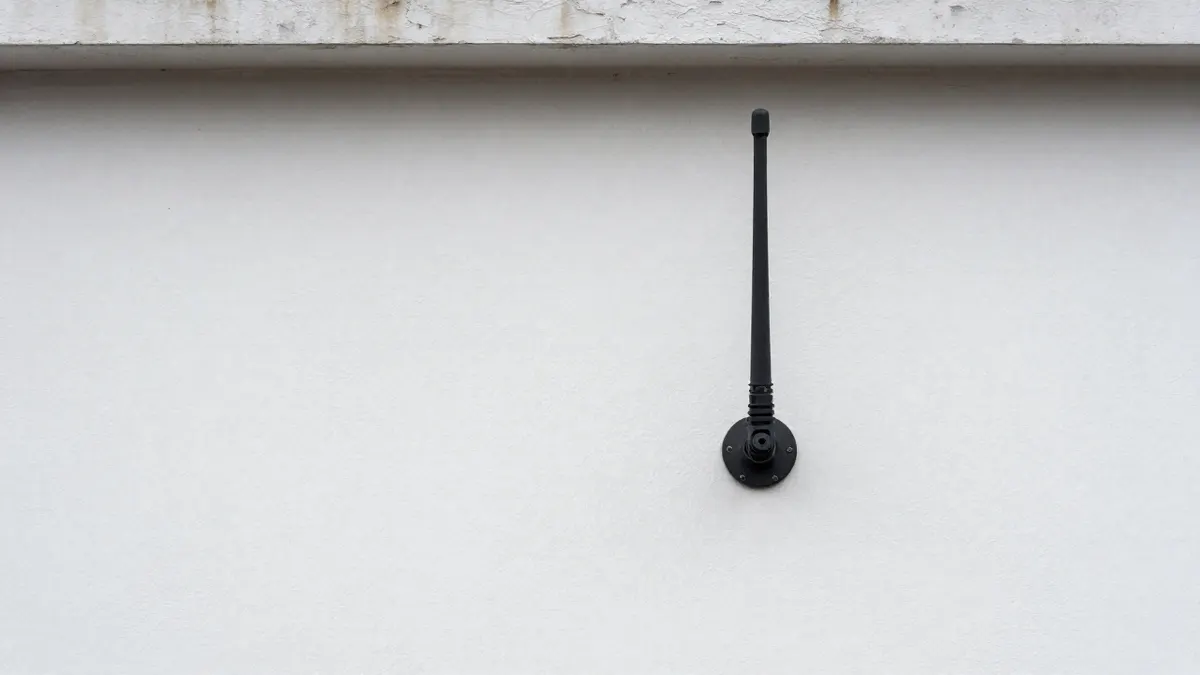
3 dBi outdoor antenna for EU868: range and placement
Expect roughly 1 to 3 km in dense urban areas and 5 to 10 km in open country with a clear line of sight. Those numbers depend far more on height than on gain. A 3 dBi antenna on a roof ridge at 10 metres will beat a 6 dBi antenna sitting behind a window on the first floor.
Mount it vertically. A tilted whip changes the pattern and loses range toward the side it leans away from. Keep it at least 1 metre from metal masts, gutters and chimneys, and about 30 cm from other antennas.
- Pole or wall bracket, with the antenna fully above the roofline
- Vertical orientation, checked with a spirit level or a plumb line
- Weatherproofing tape or self-amalgamating tape on every outdoor connector
- A drip loop in the cable so rain does not run into the hotspot
Cable loss and connectors
The cable can cost you more than the antenna gives you. Thin RG174 loses around 0.9 dB per metre at 868 MHz, so a 5 metre run eats about 4.5 dB, which wipes out the 3 dBi gain and then some. LMR400 or similar low-loss coax drops that to around 0.2 dB per metre.
Keep the run short. If the hotspot can sit close to the antenna, say in a loft or a weatherproof box under the eaves, you will often do better than with a long cable and a bigger antenna.
When 3 dBi is the right choice, and when it is not
Pick 3 dBi if the hotspot sits high, the area is hilly, or you are in a city with tall buildings nearby. The wide vertical pattern keeps nearby devices covered instead of overshooting them.
On flat ground with few obstacles, more gain flattens the pattern and stretches the horizontal reach. A 4 dBi helium antenna is a modest step up that still behaves well on most roofs. A 6 dBi helium antenna makes sense in open, flat terrain, but it can leave blind spots close to the mast. Check the regulatory limit as well: EU868 rules cap effective radiated power, so gain plus the hotspot output should stay within the legal figure for your sub-band.
Buying checklist
When comparing listings, look at the stated frequency range first. Many cheap antennas are tuned for 915 MHz and perform poorly on EU868. Then check the connector type, the IP rating (IP65 or better for outdoor use), and the real length of any pigtail included.
A Helium antenna shop will usually list these figures side by side, which makes it easier to compare a 3 dBi model against higher-gain options. Be wary of listings that give no frequency band at all.
Frequently Asked Questions
Is a 3 dBi antenna good enough for a Helium hotspot?
Yes, in most urban and hilly settings. Height and a clear view matter more than gain, and a 3 dBi antenna mounted high will outperform a stronger one placed low. The stock antenna on many hotspots is also around 3 dBi.
Can I use a 915 MHz antenna on EU868?
It will work badly. The mismatch raises the standing wave ratio and cuts both transmit and receive performance. Use an antenna specified for 863 to 870 MHz.
How high should I mount the antenna?
As high as practical, ideally above the roofline and at least 5 to 10 metres off the ground. Each doubling of height typically gives a noticeable gain in coverage, especially in built-up areas.
Do I need lightning protection?
For a roof or mast installation, yes. A coaxial surge arrestor near the cable entry point and a proper earth connection are a sensible minimum. A local electrician can confirm what your building requires.