Cat5e UTP Cable for Hotspots and Home Networks
A Cat5e UTP cable carries Gigabit Ethernet (1000 Mbps) over copper pairs for up to 100 metres. That is plenty for a Helium hotspot, a LoRaWAN gateway, a PoE camera or a desktop PC. Cat5e stands for "Category 5 enhanced", and UTP means unshielded twisted pair: eight thin wires, twisted in four pairs, with no metal screen around them.
Most hotspot miners need very little bandwidth. A LoRaWAN gateway typically moves a few megabytes per day, so the cable matters for stability, not speed.
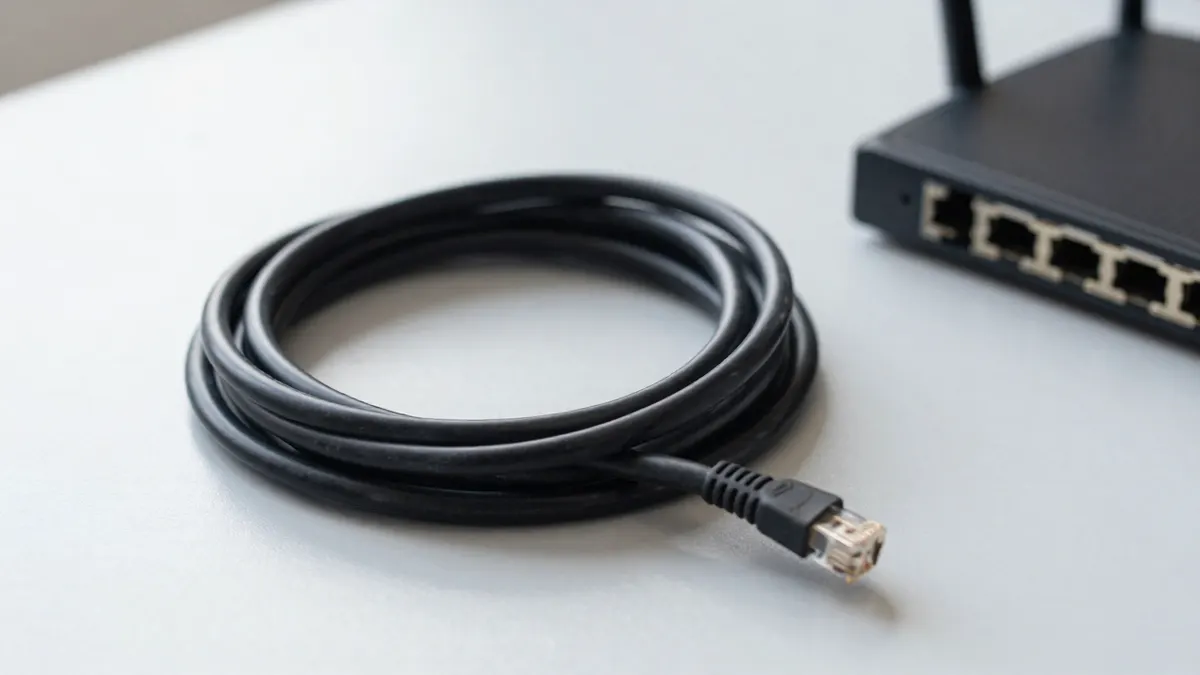
What a Cat5e UTP cable can and cannot do
Cat5e is rated for 100 MHz. It handles 1 Gbps reliably at full length, and it can run 10/100 Mbps links without any trouble. It will not give you 10 Gbps except over very short runs, so for a new office backbone Cat6 or Cat6a is the better pick.
For a hotspot on a shelf or in a loft, though, Cat5e is the sensible choice. It is thin, flexible, and costs around 0.20 to 0.50 EUR per metre for decent copper.
Cat5e UTP cable length limits
The standard allows 90 metres of fixed cable plus 10 metres of patch leads, so 100 metres end to end. Go beyond that and you get packet loss, link drops and negotiation down to 100 Mbps. Some people push to 110 metres and get away with it, but a hotspot that quietly drops offline costs you rewards, so stay inside the limit.
Common lengths for home use:
- 1 to 3 m for linking a miner to a router in the same room
- 5 to 10 m for a run to a nearby room
- 20 to 30 m for a roof or garden gateway
- Up to 100 m for outbuildings, using a full 100m Cat5e UTP cable reel or box
Copper or CCA: check the label
Cheap cable is often CCA, copper-clad aluminium. It looks fine and passes a quick test, but it has higher resistance, breaks more easily when bent, and cannot carry PoE reliably over long runs. Look for "solid bare copper" or "100% copper" printed on the jacket. If the label says nothing, assume the worst.
Indoor or outdoor Cat5e
Standard PVC jacket cable is for indoor use. Sunlight makes it brittle within a year or two. For a gateway mounted on a mast or an outside wall, choose outdoor-rated cable with a UV-resistant polyethylene jacket, ideally with a gel-filled or flooded version if it will be buried.
Keep the Ethernet run away from mains cables by at least 5 to 10 cm. UTP has no screen, so parallel power lines can add noise. If you must cross a power cable, cross at 90 degrees.
Wiring a Cat5e cable yourself
Making your own leads lets you cut the cable to the exact length, which keeps things tidy. You need a cutter, a stripper and an RJ45 crimping tool, plus plugs rated for solid or stranded wire (they differ).
T568B pin order
Use the same standard on both ends. T568B is the most common: white/orange, orange, white/green, blue, white/blue, green, white/brown, brown. Hold the plug with the clip facing down and the pins toward you when inserting wires.
Test before you mount
A cheap cable tester, around 8 to 15 EUR, lights up all eight lines in sequence. It finds a swapped pair in seconds, which is far quicker than debugging a link that negotiates at 100 Mbps only.
When a laptop or mini PC has no port
Thin laptops and some single-board computers lack an Ethernet socket. A USB RJ45 network adaptor solves that. Pick a Gigabit model if you want the full speed of your Cat5e cable, since older USB 2.0 adaptors cap near 100 Mbps.
Cat5e, Cat6 or Cat6a
Cat6 allows 10 Gbps up to about 55 metres and has a tighter twist plus often a spline separator. Cat6a holds 10 Gbps to 100 metres but is thicker and stiffer. For a miner that uses a trickle of data, the extra cost buys you nothing. For a new house you plan to keep for 15 years, running Cat6 in the walls is cheap insurance.
Frequently Asked Questions
Can I use a Cat5e UTP cable with PoE?
Yes. Cat5e supports 802.3af and 802.3at PoE, so it can power gateways, access points and cameras. Use pure copper cable, since CCA heats up and loses voltage over longer runs.
Is Cat5e fast enough for a Helium hotspot?
Easily. A hotspot or LoRaWAN gateway needs well under 1 Mbps in practice. Even a 100 Mbps link would be oversized, so cable quality and a stable connection matter more than category.
What is the difference between UTP and STP?
UTP has no metal shield, while STP wraps the pairs in foil or braid to resist interference. UTP is cheaper and easier to terminate. STP only pays off near heavy electrical noise, and it must be grounded correctly to work.
How long can a Cat5e cable be before the signal drops?
The limit is 100 metres including patch leads. Past that, expect errors and slower speeds. For longer distances, add a switch or use fibre as a midpoint.