LMR®-400 N-Male to SMA-RP-Male
An LMR 400 antenna cable with an N-male connector on one end and an SMA-RP-male on the other links a hotspot miner to an outdoor antenna that has an N-female socket. It is a low-loss coax, about 10.3 mm thick, with a 50 ohm impedance. That matters for LoRaWAN gear on 868 MHz in Europe, where every decibel lost in the cable is range lost in the air.
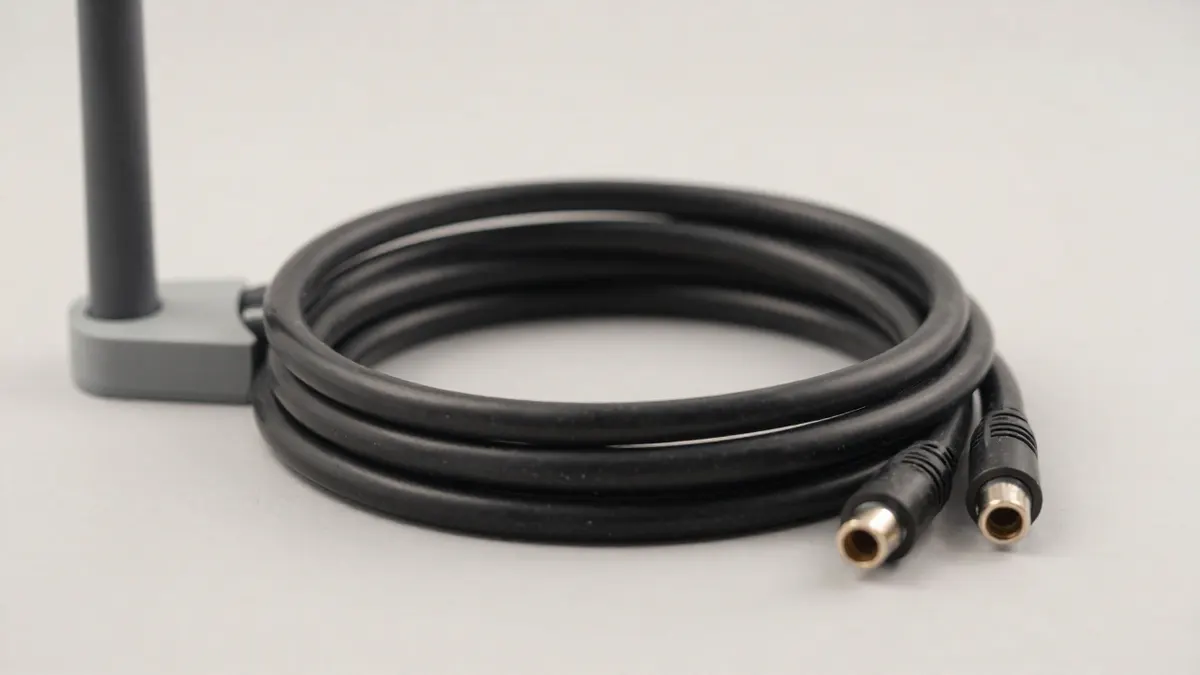
What this LMR 400 antenna cable is made of
The core is a solid copper-clad aluminium conductor, wrapped in foam dielectric, then a foil layer and a braided shield. The jacket is usually black polyethylene rated for UV, so it can sit on a mast for years.
Weight is around 150 g per metre. Minimum bend radius is about 25 mm for a one-time bend and roughly 100 mm if the cable moves or is re-routed. Tight kinks are the most common way to ruin it.
LMR-400 N-male to SMA-RP-male: which ends go where
The naming trips people up, so read it slowly. N-male has a pin in the centre and a rotating threaded collar. It mates with an N-female socket, which is what most outdoor fibreglass and panel antennas carry.
SMA-RP-male (reverse polarity) has an external thread and a socket contact inside, no pin. Many hotspot miners and Wi-Fi style radios use this layout on the device side. If your hotspot has an SMA-RP-female jack, this end fits it. A standard SMA plug will thread on but never make contact, so check the centre of your port before ordering anything.
If your antenna has an N-male instead, you need the opposite end. In that case look at the LMR-400 N-female to SMA-RP variant. And if your device uses regular SMA rather than reverse polarity, the LMR-400 N-female to SMA-male is the one that matches.
How much signal you lose on 868 MHz
LMR 400 loses about 0.22 dB per metre at 900 MHz, which is close enough for 868 MHz. That gives you rough numbers:
- 3 m run: about 0.7 dB
- 5 m run: about 1.1 dB
- 10 m run: about 2.2 dB
- 20 m run: about 4.4 dB
Add around 0.1 to 0.2 dB for each connector pair. Losing 3 dB cuts your effective power in half, so a 20 m run starts to hurt. Past about 15 m, most people are better off moving the hotspot closer to the antenna and running Ethernet or PoE instead.
Compare this with thin RG58 or similar, which can lose 0.6 dB per metre or more at the same frequency. On a 5 m run that is 3 dB against 1.1 dB. The thicker cable pays for itself fast.
LMR 400 versus other cable options
LMR 400 is stiff. It does not like to be routed through tight window frames or looped behind furniture. For runs under 2 m, a thinner LMR 240 style cable bends more easily and the extra loss is small, about 0.5 dB.
Some sellers offer lookalike cables under a different label, such as the HHS-400 antenna cable, which follows the same 400 class specification. Compare the datasheet attenuation figure rather than the name. If the listed loss at 900 MHz is above 0.25 dB per metre, it is probably not a true low-loss build.
Installing it without wrecking the range
A few habits make the difference between a clean setup and a flaky one.
- Make a drip loop just below the antenna so rain runs off before it reaches the connector.
- Wrap the N connector with self-amalgamating tape, then a layer of vinyl tape on top.
- Fasten the cable every 40 to 50 cm along the mast, without crushing the jacket.
- Tighten N connectors by hand plus a gentle quarter turn. A wrench is not needed and can damage threads.
Put a lightning arrestor in line if the antenna sits on a roof peak. That adds a little loss, usually 0.1 to 0.3 dB, but it protects the hotspot.
Prices and lengths
Ready-made assemblies come in 1, 3, 5, 10 and 15 m lengths. Expect roughly 15 to 25 euros for a 3 m cable and 30 to 50 euros for 10 m, depending on the brand and connector plating. These are indicative figures only. Very cheap listings often use a thinner centre pin or a poorly crimped connector, which shows up as higher return loss.
Frequently Asked Questions
Can I use this cable with any LoRaWAN hotspot?
Only if the hotspot has an SMA-RP-female port, which is a threaded jack with a centre pin. Many models use plain SMA or a different layout, so look at the port or the manual first. Mismatched gender will not make electrical contact.
What is the longest LMR 400 run worth using?
Up to about 10 m is usually fine, with around 2.2 dB of loss at 868 MHz. Beyond 15 m the loss gets close to 3.5 dB or more, and relocating the hotspot to the mast is the better option.
Is LMR 400 waterproof?
The jacket resists water and UV, but the connectors do not seal fully on their own. Wrap them with self-amalgamating tape and add a drip loop to keep moisture out of the shield.
Does the impedance matter?
Yes. LoRa antennas and hotspots are 50 ohm, and LMR 400 matches. Using 75 ohm TV coax causes mismatch and wastes power.