Antenna Wall Mount
An antenna wall mount bracket holds a LoRa antenna a short distance away from a wall, usually 15 to 40 cm, so the wall does not block or reflect the signal. For most Helium hotspot owners it is the cheapest way to gain height and a clear line of sight without building a full mast. Prices start at around 8 to 15 EUR for a basic galvanized steel model.
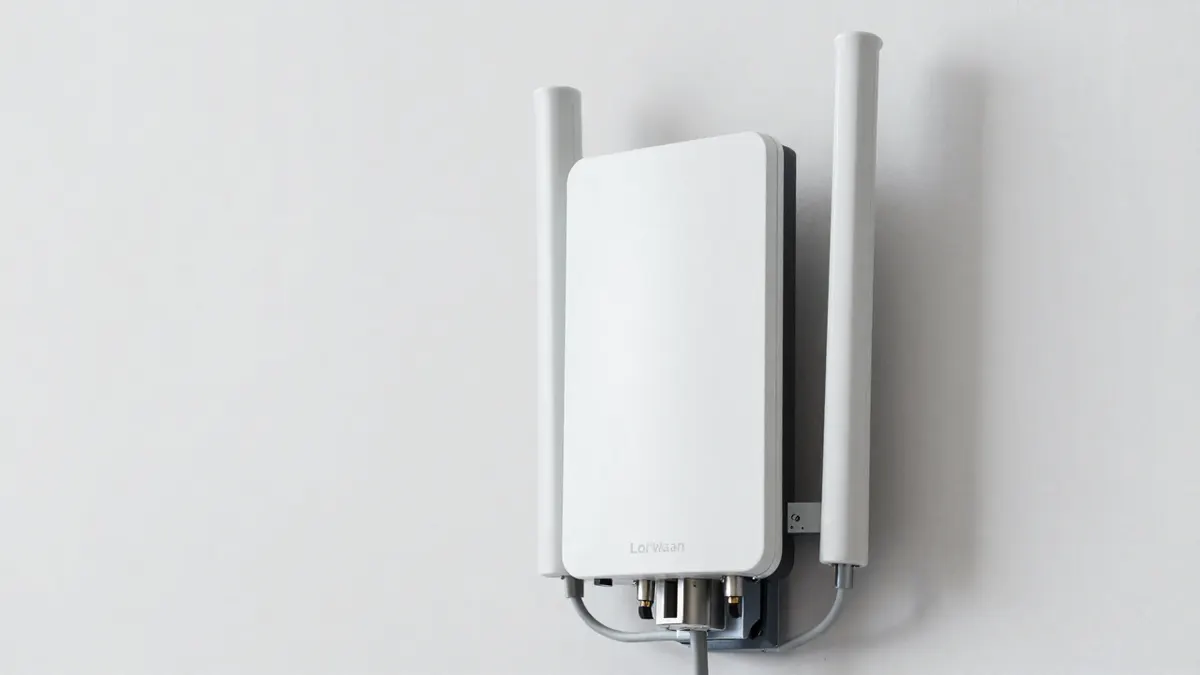
What an antenna wall mount bracket actually does
The bracket is an arm, or a pair of arms, fixed to brickwork, concrete or a timber fascia. A pole clamp at the end grips a tube between 25 and 50 mm in diameter. Your antenna, or a short mast carrying it, slides into that clamp.
Distance from the wall matters more than people expect. A fibreglass 868 MHz antenna sitting 5 cm off a brick wall will lose part of its pattern on one side. Push it out to 30 cm or more and the radiation pattern stays close to what the manufacturer printed on the datasheet.
Two arm types are common:
- Fixed offset arms, usually 20 to 30 cm, which are simple and rigid.
- Telescopic or double-clamp arms, which let you move the pole out to 50 cm or so.
Helium antenna wall mount: what to check before buying
Most outdoor Helium antennas (3 to 6 dBi fibreglass omnis, 60 to 120 cm long) weigh under 1 kg. That is light. Wind load is the real force on the bracket, not weight, and a 1.2 m antenna on a rooftop edge can catch a lot of it in a storm.
Material and coating
Hot-dip galvanized steel is the sensible default. Stainless steel (A2 or A4) costs roughly double but is worth it within 20 km of the sea. Avoid bare zinc-plated brackets outdoors, since they show rust within a season or two.
Clamp size
Measure the tube you will clamp before choosing. Many hotspot antennas come with a 1 to 1.5 inch mounting collar, which fits a 32 to 40 mm pole. A clamp that is too large will rotate and slowly sag, so use a rubber shim if there is any gap.
Fixings
Use M8 anchors in solid brick or concrete, with a spacing of at least 10 cm between the two bolts. Hollow brick needs chemical anchors. Never rely on plasterboard or thin cladding, because the leverage on the top bolt is considerable.
Where to place it on the wall
Higher is better, but only up to a point. Mounting just under the eaves, around 4 to 8 meters above ground, gives most of the benefit for urban coverage. Going from 3 m to 8 m can noticeably widen the number of witnesses a hotspot sees.
Pick a wall facing the direction with the most open space. Antennas are omnidirectional, but the building behind them still absorbs signal. Place the antenna at least 1 m from chimneys, metal gutters and other transmitters.
Keep the cable run short. LMR400 loses about 0.22 dB per meter at 868 MHz, so a 10 m run costs over 2 dB. Thin RG58 would lose about 5 dB on that same length, which erases the gain of a better antenna.
Heavy loads and special situations
If you plan to carry a longer antenna, a second device, or a pole taller than 1.5 m, step up to a Heavy duty antenna wall mount with thicker steel (3 mm or more) and a wider base plate. Standard light brackets bend under repeated wind gusts.
Renting an apartment? Drilling may be forbidden. A Balcony mast antenna mount clamps to a railing and leaves the facade untouched, though you lose some height. Flat roofs are another case: a Tile base antenna mount or ballast base avoids penetrating the membrane.
Installation steps
- Mark the two holes with a level, then drill 8 mm holes about 50 mm deep.
- Insert the anchors and fix the bracket with washers, leaving bolts snug but not crushed.
- Slide the pole into the clamp and tighten evenly until it cannot twist by hand.
- Fit the antenna, then add drip loops to the cable before it enters the building.
- Seal the connector with self-amalgamating tape plus a layer of vinyl tape.
Plan for about 30 to 45 minutes if you have a ladder and a drill. Work with a second person, and never lean a ladder against the antenna pole itself.
Grounding and lightning
A wall bracket does not protect you from lightning. If the antenna is the highest point on the roofline, add a lightning arrestor on the coax near the entry point and bond it to a proper earth. Local rules vary, so check them before you start.
Frequently Asked Questions
How far should an antenna sit from the wall?
Aim for at least 20 to 30 cm, and more if the wall is metal-clad or reinforced concrete. Close to the wall, the structure distorts the pattern and eats part of the signal. Moving out to 50 cm gives better results in tough locations.
Can I use a TV satellite bracket for a Helium antenna?
Often yes, as long as the clamp matches the pole diameter and the bracket is rated for outdoor use. Satellite brackets are typically 30 to 40 mm clamps with sturdy arms. Check that the steel is galvanized, and replace any rusted bolts.
What size pole fits most brackets?
Most wall brackets accept poles from 25 to 50 mm. A 32 mm or 40 mm galvanized or aluminium tube is a safe pick for fibreglass antennas under 1.5 m long.
Will a wall mount reduce my range?
Only if it is poorly placed. A bracket that keeps the antenna 30 cm out and above the roofline can match a mast, while one tucked below a window ledge will see less. Height and clearance count more than the mount type.