Helium Antenna Balcony Mount: How to Choose and Install One
Why a balcony mast works for a Helium hotspot
A helium antenna balcony mount gets your LoRaWAN antenna out past the railing, away from the wall and the glass, and a few meters higher than a windowsill. That matters because 868 MHz signals lose a lot when they pass through concrete, metal shutters or low-E windows. Even 1.5 to 2 meters of extra height above the balcony floor can change how many witnesses and devices your hotspot reaches.
The usual setup is a short steel or aluminum mast, 1 to 2 meters long, fixed to the railing or the balcony wall with two clamps. The antenna sits on top, and a coaxial cable runs back inside to the miner.
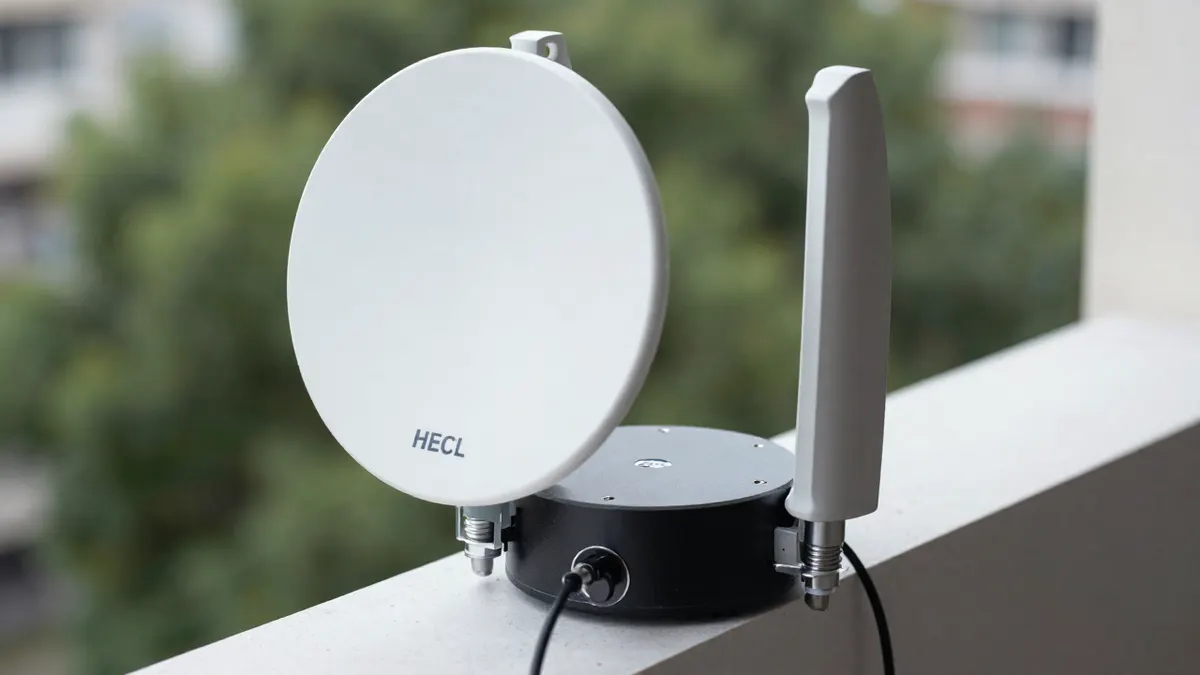
Balcony mast pole antenna mount: what to check first
Measure before you shop. Most balcony masts use a tube between 35 and 60 mm in diameter, and the clamp has to match it. A common choice is a Mast pole clamp 40-60mm, which fits both round railings and standard masts without shims.
Pole diameter and material
Galvanized steel is cheap and stiff, usually from around 15 to 30 EUR for a 1.5 m mast. Aluminum is lighter and does not rust, but it flexes more in wind. On a seaside balcony, pick stainless or hot-dip galvanized hardware, since cheap zinc plating can show rust within a single winter.
Railing type
Round tube railings take a clamp easily. Flat bars and glass panels do not. For glass, skip the railing entirely and look at the floor or the wall instead.
Wall, floor or railing: picking the fixing point
Railings are the fastest option, no drilling, two clamps and a spanner. They are also the weakest, because many railings are only rated for people leaning on them, not for a mast catching a 90 km/h gust.
If you own the apartment or have permission, an Antenna wall mount bolted into masonry is the sturdier answer. Use two brackets about 50 cm apart, with M8 anchors rated for the wall material. Hollow brick needs chemical anchors, not plain plugs.
Tenants often cannot drill. In that case a weighted base on a flat balcony floor works, as does a Tile base antenna mount on a flat roof or terrace. Add ballast of around 15 to 25 kg for a 2 m mast, and tie it back to the railing with a strap as a second line of safety.
Placement tips that improve coverage
- Keep the antenna at least 30 cm away from the mast top, so the metal does not distort the pattern.
- Mount it vertically. A tilted fiberglass antenna loses gain toward the horizon.
- Face the balcony outward, and avoid putting the building between the antenna and the streets you want to cover.
- Keep cable runs under 5 m when you can. Thin RG58 loses around 1 dB every 2 meters at 868 MHz, so use thicker low-loss cable for longer runs.
Weatherproofing and safety
Wrap every outdoor connector in self-amalgamating tape, then a layer of vinyl tape over it. Water inside an N-type connector is the most common reason a good antenna suddenly performs badly. Form a drip loop in the cable just before it enters the building.
Check local rules. Some housing associations in Europe limit what can be fixed to a facade or stick out past the balcony line. Ask first, it takes a short message and saves you taking it all down later. A lightning arrestor is a sensible addition if the mast is the highest point nearby.
Frequently Asked Questions
Can I mount a Helium antenna on a balcony without drilling?
Yes. Railing clamps and weighted floor bases need no holes. Use ballast of 15 to 25 kg and a safety strap, and keep the mast under 2 meters in exposed spots.
How tall should a balcony mast be?
One to 1.5 meters is enough for most apartments. Going above 2 meters raises wind load sharply, and the extra gain rarely justifies the risk on an upper floor.
What pole size do balcony clamps usually fit?
Most fit 40 to 60 mm tubes. Measure the outer diameter of your railing or mast with calipers or a tape around the tube, and divide the circumference by 3.14.
Will glass or a metal railing block the signal?
Metal railings can reflect and distort the pattern if the antenna sits too close, so raise it above the top rail. Standard clear glass has a small effect, but coated or low-E glass can block a large share of the signal.